


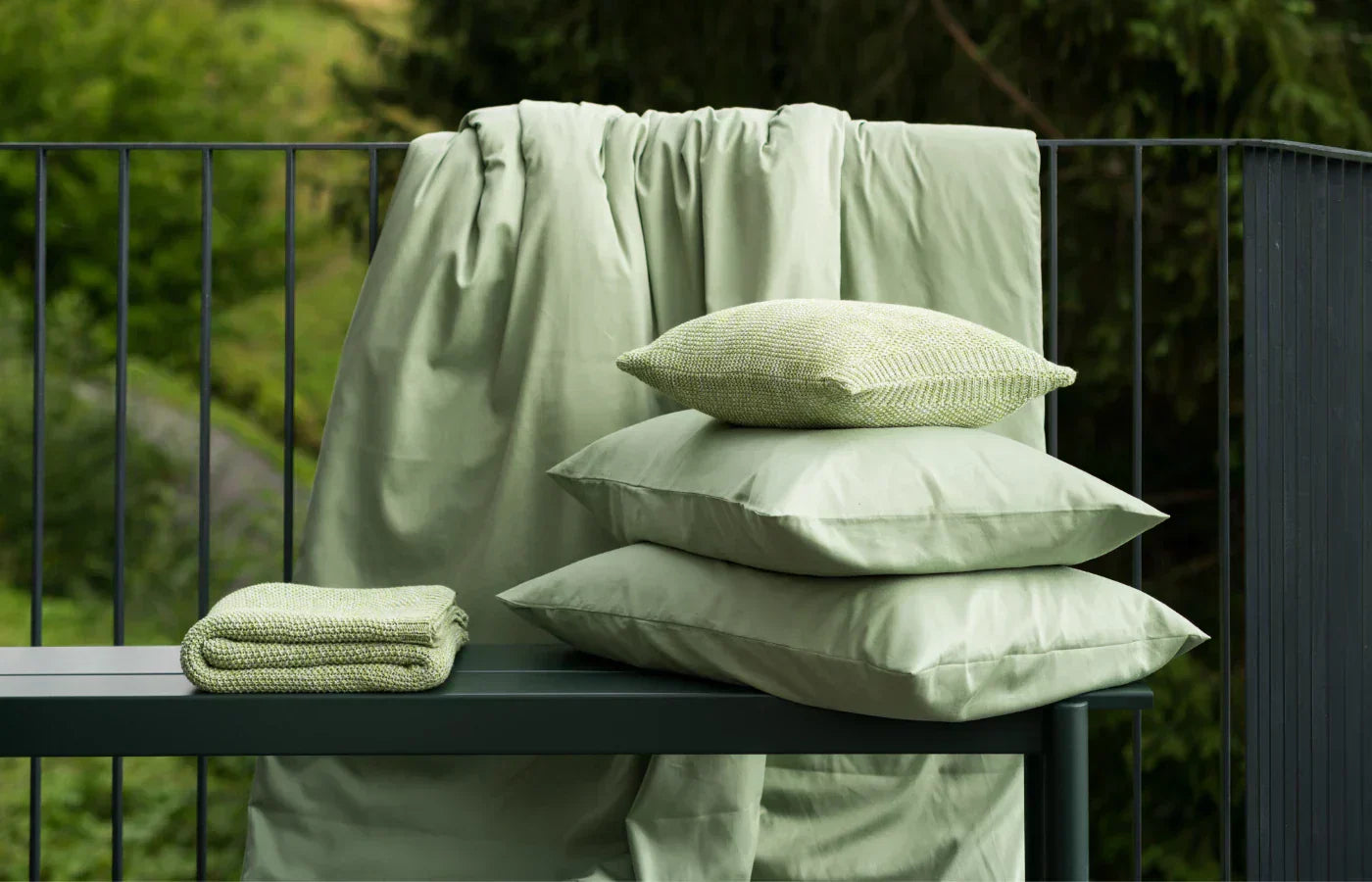
At Lejaan, we pride ourselves on the thoughtful design of each product. We select the best materials and their most sensible combinations, always keeping timeless design in mind. We want our products to serve you for as long and as well as possible. You, too, can play a role in this by properly caring for your bedding, sheets, duvets, and pillows.
To keep fabrics looking new, it's worth treating them with care, remembering the basic rules, which we will remind you of today. Don't worry, it's not quantum physics.
TENCEL™ LYOCELL CARE
Before "dressing" your bed with TENCEL™ Lyocell bedding, it is always recommended to wash the covers at least once at the recommended temperature. This will soften the material's surface and prepare it for its first night together.
To preserve the color and all other benefits of the material, as a rule, you should wash the bedding inside out. The ideal temperature for normal washing is 40°C, while for more stubborn stains, the temperature can be set up to 60°C.
For TENCEL™ Lyocell, avoid stain removers and fabric softeners. The material itself is naturally soft and exceptionally smooth, so it does not require any softeners. Fabric softener coats the fibers, causing their positive properties, such as breathability and moisture absorption, to lose their intensity.
The bedding can be tumble dried. Turn it inside out and select a gentler program. If you are unsure, you will find a hint on the product label.


The elegant and exceptionally soft Grandpa's Atelier collection with TENCEL™ Lyocell.
MAXIMIZING THE POTENTIAL OF ORGANIC COTTON
The charm of organic cotton lies primarily in its ecological production, free from chemicals and pesticides. To preserve all its benefits, including its natural gentleness on the skin and environmental friendliness, we must remember a few basic rules during its care.
To ensure the longevity of organic cotton bedding, we recommend washing it at 40°C. If you need to remove more noticeable stains, you can safely set the temperature to 60°C. Always try to use the appropriate amount of detergent and remember to wash the bedding inside out. Organic cotton can be easily tumble dried.


Mum's Kingdom bedding in intense green, made of 100% organic cotton, inspired by a blooming garden.
BEDDING MADE OF COTTON AND COTTON WITH POLYESTER BLEND
In the case of standard cotton and cotton with a polyester blend, you don't have to worry about washing at 60°C. The main advantages of both materials include a durable structure and above-average wear resistance. However, if you only want to refresh your pillowcases or sheets, 40°C is enough. For best results, it is worth turning the bedding inside out before putting it in the washing machine. These collections can also be tumble dried.


The main advantages of cotton are its durability and resistance to damage.
DON'T FORGET ABOUT DUVETS AND PILLOWS
The ideal washing temperature for Comfort and Classic series duvets and pillows is 60°C. For both versions, ⅓ of the normal amount of detergent is sufficient.
Try to wash all fillings every 6-12 months. Avoid dry cleaning, bleaching, and ironing. After washing, and ideally every month, we recommend thoroughly shaking the products. This will allow the fibers to relax and air out as needed, and help maintain their fluffiness.
After waking up, always leave the bed unmade for a while. Duvets and pillows also need to breathe and get rid of the moisture accumulated in them overnight. Airing them outdoors from time to time will also not hurt.
We have dedicated a separate article to our Down Comfort series duvets and pillows with feather filling and their care.


Try not to make the bed immediately after waking up - allow excess moisture to evaporate from it.
A FEW GENERAL TIPS TO CONCLUDE
Just like clothes, it's worth washing bedding by separating whites, light colors, and dark colors. Generally, we do not recommend using fabric softeners - for the simple reason that they contain hydrophobic substances that deprive the fabric of its ability to absorb water, thus causing the bedding to lose its practical properties.
When drying outdoors, it's best to avoid exposing pillowcases to direct sunlight and hang them inside out. This will help them retain their intense and uniform color. If you're wondering which bedding can be ironed after washing, read our tips in the dedicated article.
Bedding should be washed and changed every two weeks. Washing naturally strengthens the fibers in the material's structure, which effectively prevents pilling.
If you plan to buy a complete set of bedding in a specific color, consider buying several pillowcases. They are more prone to wear and tear due to the natural oiliness of facial skin, sweat, and makeup residue. For hygiene purposes, it is worth changing them more frequently.

Caring for bedding does not require complicated steps; just follow a few simple rules.
Udostępnij:
Mix & Match for advanced users
Thermoregulation: the first step to good sleep